"Honey, it itches so much, it itches so much, stop it!"
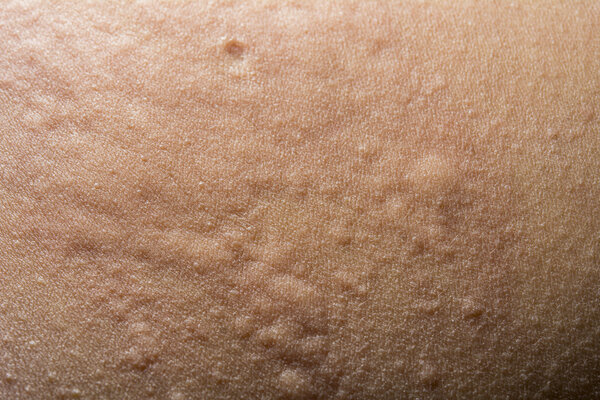
Xiao Meng (pseudonym) pushed her husband's hand away, sat up abruptly in bed, turned on the light, and lifted her pajamas. Her back, neck, and chest were covered in small lumps.
"What are these growths? Is it because of the seafood we had for lunch? Come on, let's get you to the hospital right away." Xiao Meng's husband grabbed his clothes and picked up the car keys.
Urticaria is a relatively common skin disease. Mild cases often heal without treatment, but for more severe cases, it is not only extremely itchy but also prone to recurrence, causing such torment that one feels like peeling off their skin.

I. What are the causes of urticaria?
Like Xiao Meng, there are many and complex causes of urticaria, but there are four main causes.
1. Dietary reasons
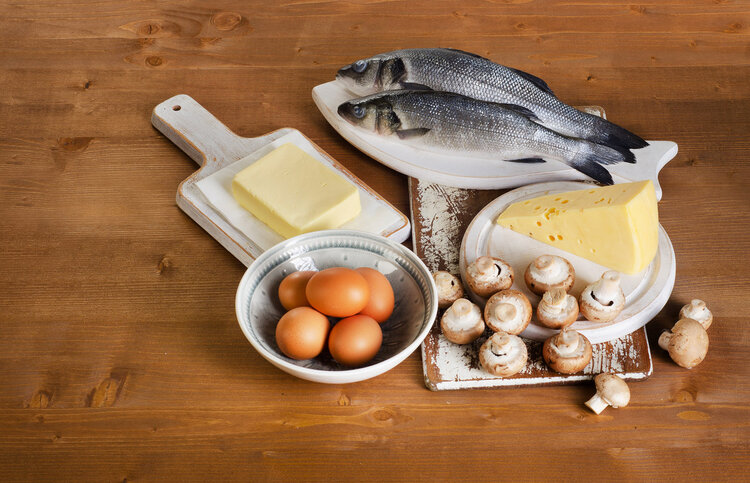
Urticaria is closely related to diet. The symptoms of urticaria caused by different foods may vary. For example, people who are allergic to seafood may develop urticaria when they eat shrimp, crab and other foods. Some people who are allergic to dairy products or nuts may develop urticaria after eating milk, eggs, ginkgo and other foods.
2. Infection
Infection is one of the important causes of urticaria, especially Helicobacter pylori infection. Other causes include HPV infection, hepatitis B and hepatitis C virus infection, and dermatophyte infection.
3. Medications
Many medications can cause urticaria, such as penicillins and sulfonamides. Histamine releasers, such as aspirin, vitamin B, and atropine, can also easily cause urticaria.
4. Too much pressure
Psychological factors are also one of the common causes of urticaria. Some people will develop urticaria when they are under too much stress. Other causes include anxiety and insomnia.
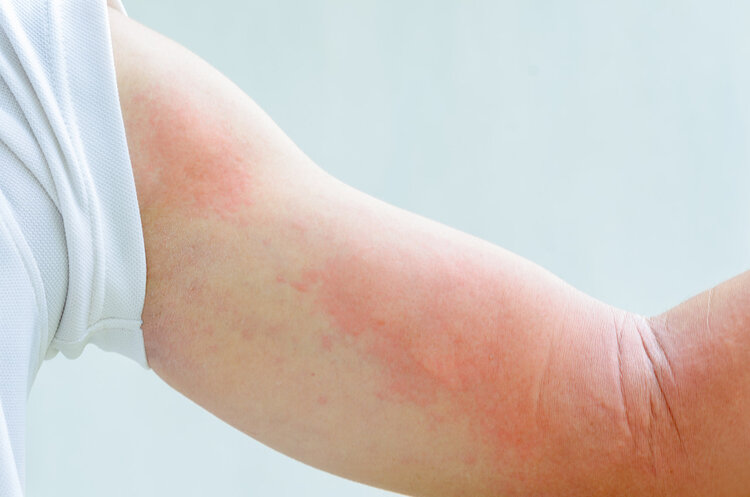
II. Urticaria is not a trivial matter; in severe cases, it can lead to death.
Many people think that urticaria is a minor issue, but the complications of urticaria can be very serious.
Untreated urticaria can lead to respiratory inflammation due to the urticaria virus. The temporary weakened immune system can also make the body susceptible to infections by other bacteria and pathogens, potentially causing severe pneumonia. In severe cases, it can lead to acute lung injury or acute respiratory distress syndrome. Furthermore, the massive release of inflammatory factors can trigger systemic inflammatory response syndrome, resulting in suffocation and death. Therefore, urticaria is not a trivial matter, especially for infants and young children.
III. How does Traditional Chinese Medicine treat urticaria?
In Traditional Chinese Medicine (TCM), urticaria is also called tinea, primarily due to the accumulation of pathogenic factors leading to a deficiency of Qi (vital energy). So, what methods does TCM use to treat urticaria?
Traditional Chinese medicine (TCM) for internal use + external washing
Internal and external application of traditional Chinese medicine are among the more common methods for treating urticaria. When urticaria flares up, based on a doctor's diagnosis, chronic urticaria with disharmony between the Ying and Wei (nutritive and defensive qi) and excessive liver qi can be treated with Chaihu Longgu Muli Tang (Bupleurum, Dragon Bone, and Oyster Shell Decoction); for urticaria related to qi and blood deficiency and wind-cold invasion, Guizhi Tang (Cinnamon Twig Decoction) with modifications can be used.
In addition to oral medication, patients with urticaria can also use external washing methods at the same time, taking a two-pronged approach. The external washing formula is made by boiling raw dragon bone, raw oyster shell, tribulus terrestris, salvia miltiorrhiza, schizonepeta tenuifolia, saposhnikovia divaricata, safflower, peach kernel, red peony root, roasted licorice root, angelica sinensis, and cicada molting together with water. After controlling the water temperature at 38 to 41 degrees Celsius, use it to wash the whole body.
Acupuncture therapy
For urticaria, the "Old Ten Needles" acupuncture method can be used, selecting the following acupoints: Shangwan (CV12), Zhongwan (CV12), Xiawan (CV13), Qihai (CV6), bilateral Tianshu (ST25), Zusanli (ST36), Neiguan (PC6), Quchi (LI11), Hegu (LI4), and Xuehai (SP10). Acupuncture is performed using a balanced tonifying and reducing technique, with treatment three times a week. In addition, patients can also use auricular acupuncture and bloodletting to treat urticaria.
Urticaria causes great distress to many people's lives and work. When urticaria occurs, it is important to treat it promptly to avoid it becoming chronic.