Afang (pseudonym), a recent college graduate, never expected that not changing her underwear for 30 days and her irregular lifestyle would put her at risk of developing cancer.
A month ago, Afang started feeling tired and unwell, but she thought it was due to staying up too late. Ten days later, Afang's condition worsened; she experienced persistent abdominal pain, which even kept her awake at night . Her roommate noticed her unusual behavior and insisted that she go to the hospital for a checkup.
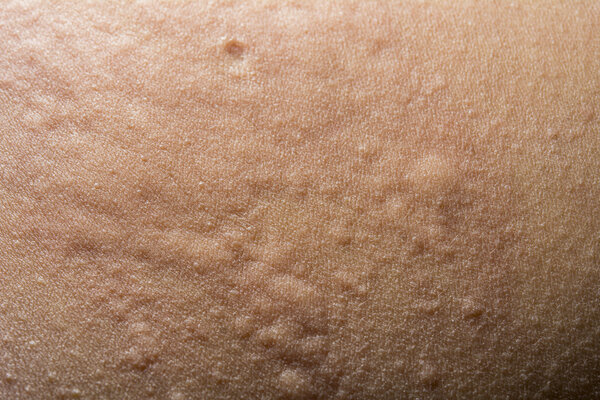
During the physical examination, the doctor discovered growths on the outside of Afang's genitals , and further examination suggested that it was a precancerous lesion of the vulva .

Generally, this type of precancerous lesion is common in postmenopausal women over 50 years old , so it is extremely rare for Afang to be only 24 years old.
Under persistent questioning from the doctor, Afang finally confessed that she was very busy with work and often had to stay up late, so she was always lazy in her personal life . For example, she would wear several pairs of underwear in rotation, changing them only once a month; she would wear several sets of bras in rotation, washing them only once a week. To improve her performance while staying up late, she would often eat late-night snacks and smoke…
The doctor said that this unhealthy lifestyle increased her risk of developing the disease, which was a real shame.
I. How far is a cancerous lesion from cancer?
Through surgery, Afang successfully removed the precancerous lesion, but she was still a little scared: if she had waited any longer, would it have turned into cancer?
Although precancerous lesions contain the word "cancer," they are different from cancer.
Doctor explained that the occurrence and development of cancer is a long process, roughly divided into several steps: normal tissue → precancerous lesions → invasive tumors . It is clear that precancerous lesions are not cancer, and may not even reach the stage of early-stage cancer ; they can either revert to normal tissue or progress to cancer.
For a precancerous lesion to develop into a malignant tumor, certain conditions need to be met, and it takes a long process of several years, or even more than a decade.

II. Women's reproductive structure is inherently more prone to "disease".
When it comes to gynecological diseases, many women avoid talking about them out of a sense of shame, and also actively avoid certain items during physical examinations.
In the general public's understanding, gynecological diseases usually refer to gynecological inflammations, including cervicitis, endometritis, vulvitis, vaginitis, and oophoritis. The female reproductive system is unique , with the urethra in front and the anus behind, making it very susceptible to contamination. If sanitary napkins are not changed frequently enough during menstruation, or if personal hygiene is inadequate, the risk of infection can easily increase, leading to gynecological inflammation.
In addition, improper sexual activity, endocrine disorders, and pregnancy reactions may also allow various pathogens to hide in folds or glands, increasing the risk of gynecological diseases.

Although there are many causes of gynecological inflammation, more than 60% of gynecological diseases are related to hygiene . Studies have found that a woman's underwear may contain an average of 0.1g of feces, and excrement contains bacteria such as E. coli and Salmonella, which cannot be completely killed even with normal washing and drying.
In short, women can cut corners on many things, but they absolutely cannot skimp on underwear. It should be washed daily, disinfected regularly, and replaced every 3 to 6 months to reduce the risk of gynecological inflammation.
3. What are the secretions on underwear?
The "discharge" on your underwear is called "leukorrhea," which comes from the cervical glands, endometrial glands, and glands on both sides of the uterus, and also contains shed epithelial cells. These secretions can remove old cells, balance the pH of the private area, and play a role in inhibiting bacteria, cleaning, and maintaining normal function.
Physiological vaginal discharge is normal and does not harm the body. However, if the discharge exhibits the following "abnormalities," one should be alert to the possibility of disease.
1. Increased quantity
The discharge is clear and looks similar to normal leukorrhea, but the amount is increased. This may be due to abnormal secretion caused by chronic cervicitis, ovarian dysfunction, or adenosis.

2. Appears like tofu dregs
If the discharge is not a mucus-like substance, but rather coagulated into a curd-like or cottage cheese-like consistency, and is often accompanied by itching and burning, it may be candidal vaginitis.
3. It appears purulent, yellow or yellowish-green.
The discharge is purulent, yellow or yellowish-green, thick, and has a foul odor, which suggests a possible bacterial infection or may be a sign of a tumor, requiring prompt examination.
4. Appears as a water sample
A continuous flow of discharge resembling "rice water," accompanied by a foul odor, may be a sign of advanced gynecological tumors, including cervical cancer and vaginal cancer.
Extended Reading – Women's Health: Choosing the Right Underwear is Important
A small pair of underwear, originally intended to protect a woman's delicate and unique reproductive structure, can lead to health problems if the wrong pair is chosen. So, what kind of underwear is safest for women?
· Pure cotton underwear
Underwear that is too tight or made of synthetic fibers will first and foremost feel uncomfortable, and the constant friction between the clothing and the skin can cause dermatitis, allergies, and itching. Pure cotton, on the other hand, is softer, more breathable, and gentler on the skin, offering a better wearing experience and being healthier.
Do not wear underwear that fades.
The dyes in the material can also harm the skin, especially underwear. Although the residual chemicals may not directly harm the private parts, they can be absorbed through the skin after contact, causing physiological changes such as inflammation.

Finally, wants to remind everyone that new underwear must be washed before wearing. Wearing unwashed underwear directly can cause skin irritation due to residual chemicals. We shouldn't take this matter lightly.