Amy has been in a bad mood lately because she found a few pimples on her vulva while showering a few days ago . Although the pimples were not painful or itchy, one of them was right next to her vagina, which made Amy very worried, wondering if she had contracted some kind of sexually transmitted disease.
Because of this, she was suspicious for several days, even wondering if her boyfriend had cheated on her and infected her with some diseases. She had seen some miscellaneous information about sexually transmitted diseases online before, but because the information was not very complete, she did not know many of the specific details.
Right now, Amy is restless and doesn't know what's going on.

Does having pimples on a woman's genitals mean she has a sexually transmitted disease?
Although a woman's private parts are also part of the skin surface, due to the special nature of the area and the sensitivity of the skin, pimples may appear in the private parts under the stimulation of various factors.
There are two main types of stimuli to the private parts and perineum: internal factors and external factors. Internal factors can be further divided into internal and external factors.
For example, menstrual blood, vaginal secretions, feces, and urine during menstruation can all irritate the perineal area . If this leads to excessive moisture in the genital area, it may cause local infections.
In addition, sexual activity and childbirth are also internal factors. High frequency of sexual activity and multiple childbirths can affect the balance of microorganisms in the female genital area , which may lead to other diseases.
However, issues with the material of underwear and irritation caused by improper use of douches are external factors that can also irritate the skin of the private parts, leading to infection or skin damage.
Besides internal factors, there are external factors. Infections caused by the invasion of pathogenic microorganisms fall under the category of external factors. Sexually transmitted diseases (STDs) are diseases caused by pathogens that result in skin infections or lesions in the perineal area.
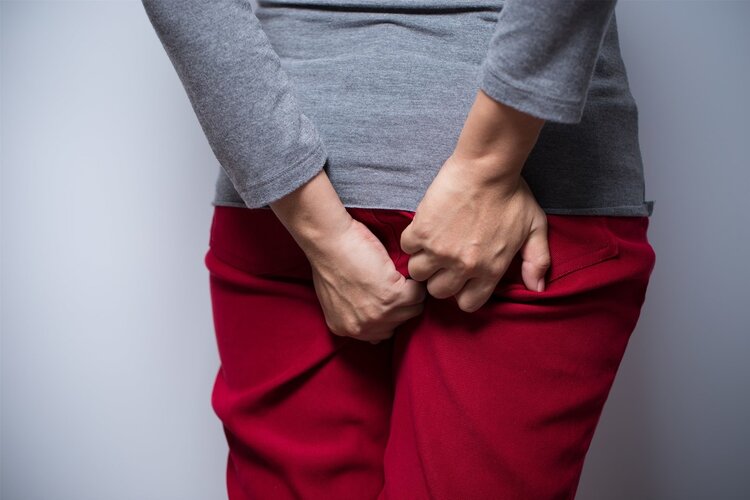
Therefore, pimples in the genital area may be caused by internal factors or external factors, and sexually transmitted diseases are only one of the external factors that can cause pimples in the genital area .
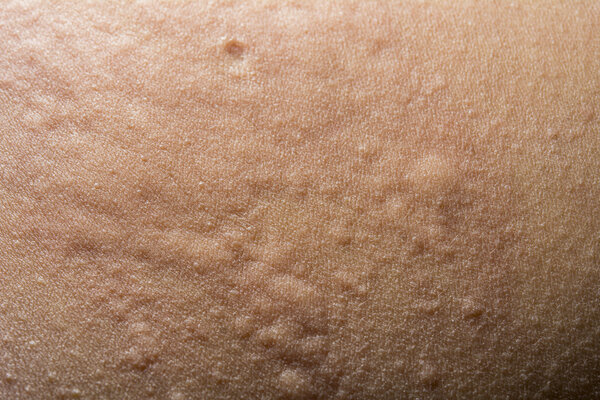
For example, genital warts are a disease caused by the HPV virus and transmitted through sexual contact. In the early stages of the disease, pale red papules appear in the genital area and around the perineum, and these papules may increase in size and number.
For example, genital herpes is caused by infection with the herpes simplex virus (HSV-2). During the illness, red papules appear in areas such as the vulva and urethra, accompanied by itching and pain. The papules enlarge into blisters, then become pustules, and finally rupture and erode.
During the course of these two sexually transmitted diseases, relatively noticeable pimples will appear in the genital area. However, these pimples are only a symptom in the early stages of the disease; as the disease progresses, the symptoms will also become significantly more severe.
Acne on the genitals is not necessarily caused by sexually transmitted diseases.
In fact, whether or not it's caused by a sexually transmitted infection (STI) depends on whether the acne symptoms change or worsen . Most acne on a woman's genitals doesn't change significantly from onset to disappearance, and these are not caused by STIs.
Pseudocondyloma:
This condition may resemble the early symptoms of genital warts, but an acetic acid test will reveal that it is not genital warts. The occurrence of pseudocondyloma is related to factors such as friction and hormonal changes .
These warts grow on the inner labia minora and vaginal opening area , appearing as pearly granules and usually without significant sensation. Pseudocondyloma generally does not require treatment. However, if symptoms such as itching occur, the warts can be removed using methods such as laser or cryotherapy.

Folliculitis:
Most pimples on the genitals are actually folliculitis, caused by a Staphylococcus aureus infection. Symptoms include redness, swelling, and pain on the affected skin. If the symptoms are mild, it will heal on its own with proper hygiene and disinfection. If the infection is severe, medical treatment is necessary.
Vulvar cysts:
Infections with E. coli and Streptococcus can cause inflammation around the labia majora, including redness, swelling, heat, and pain, and may lead to abscess formation. Small abscesses do not require treatment. Larger abscesses may require anti-inflammatory treatment, and if necessary, a cystostomy may be performed for incision and drainage.
Compared to the contagiousness and difficulty in eradicating sexually transmitted diseases, common genital inflammation is not difficult to treat, is not contagious, and poses less harm to the body.
Women should learn how to care for their intimate areas.
However, for women, daily prevention and maintenance are especially important for the health of their private parts.
First, wash your underwear frequently to keep the genital area clean . Underwear should be thoroughly cleaned and air-dried to help kill bacteria. To avoid irritating the skin in the genital area, choose underwear made of pure cotton rather than synthetic fibers, and ensure it is breathable and has a good fit .
Secondly, when cleaning the genital area, use detergents cautiously to avoid disrupting the microbial balance of the perineal area and the pH balance of the vagina. Do not use multiple detergents indiscriminately , especially if you have a genital condition.
Furthermore, when using public toilets in public places, pay attention to hygiene.

Finally, it's important to maintain healthy and moderate sexual activity . Avoid high-risk sexual practices, and if you don't intend to get pregnant, use condoms whenever possible. Pay attention to genital hygiene before and after intercourse. Also, don't have sex too frequently, and avoid intercourse during menstruation.
Protecting the health of your private parts starts with the little things in your daily life. It's also important to seek medical attention promptly if you experience any abnormalities. Regular gynecological checkups are also essential to detect any potential problems early.