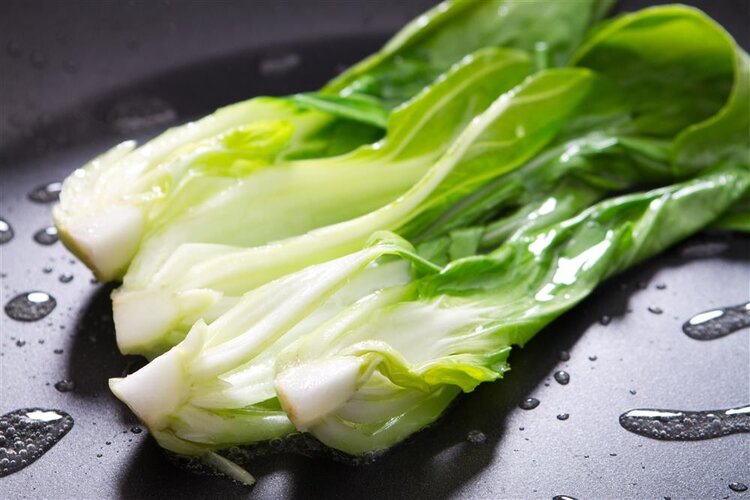
In the past, every household used iron woks for cooking, but at some point, iron woks were gradually replaced by non-stick pans.
The name "non-stick pan" is easy to understand; simply put, it means that food doesn't easily stick to the bottom. This greatly compensates for the shortcomings of iron pans, saving food waste and time for the cook to wash the pan. How can anyone not love such a good pan?

However, it has recently been reported that non-stick pans can cause cancer. Is this true?
Where did the claim that non-stick pans cause cancer come from? Do non-stick pans really cause cancer?
This claim comes from a documentary called "The Devil We Know," which mentions that the production of non-stick pans requires a raw material called PFOA, also known as C8. This substance is widely used in lubricants, fire extinguishers, cleaning agents, and cosmetics. In 2017, the International Agency for Research on Cancer of the World Health Organization listed perfluorooctanoic acid (PFOA) as a Group 2B carcinogen.
Non-stick pans come in many varieties, the most common being those with a Teflon coating. Teflon's main component is polytetrafluoroethylene (PTFE). Perfluorooctanoic acid (PFOA) acts as a solvent, causing the PTFE to polymerize. Once the solvent is formed, the PTFE is coated onto the pan's surface. The manufacturer then bakes the pan, and under high temperatures, the PFOA typically evaporates. In other words, a properly made non-stick pan will not contain any PFOA residue.
If a non-stick pan is overheated or scratched, damaging the coating, will perfluorooctanoic acid (PFOA) leak out of the non-stick coating?
In fact, perfluorooctanoic acid (PFOA) does not cause pollution below 250°C. Even under extreme heating conditions, the amount of PFOA leaking from polytetrafluoroethylene (PTFE) is extremely low—and even if PFOA pollution exists, the non-stick coating will not be the main source of pollution.
For most households, boiling water or simmering soup at 100℃ is within a safe range. For deep-frying, keeping the oil temperature at 250℃ will also be fine. However, it's crucial to avoid dry-heating a non-stick pan. Dry-heating an empty pan for 5 minutes, reaching a bottom temperature of 800℃, could pose a health risk.
Cooking in this way is healthier; those in charge of the cooking should know.
We often see cooking shows on TV where chefs flip dishes with large ladles, causing flames to leap up with a whoosh. Under the intense heat, the food releases an irresistible aroma. However, what many don't realize is that overcooking food not only makes it difficult to control the heat but also increases the production of carcinogens.
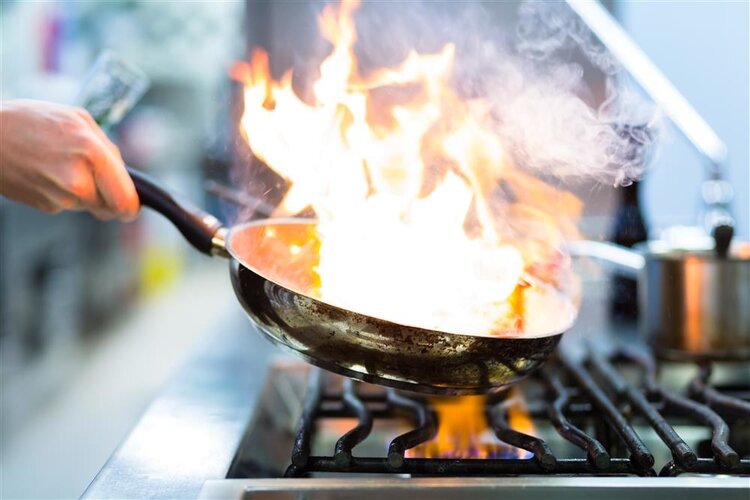
1. Add the vegetables early. Cooking oil should not be heated for too long or at too high a temperature, otherwise harmful substances will be produced. Moreover, excessively high oil temperature will destroy the nutrients in the stir-fried vegetables. When there is no obvious smoke (put in a small piece of garlic or ginger; small bubbles appear around it, but the food does not change color, indicating the oil temperature is suitable), you can add the vegetables.
2. Turn on the range hood at the same time as cooking. During cooking, the heat and oil temperature produce a large amount of harmful gases, especially high-temperature fumes. Therefore, it is essential to turn on the range hood while cooking to help remove these fumes. After cooking, do not turn off the range hood immediately. Since some residual gases may remain in the air, let the range hood continue to run.
3. Washing the pan after cooking one dish before cooking another. This is a bad habit many people have. After cooking vegetables, most people feel that not much oil was used and there is little flavor, and the bottom of the pan is clean, so they skip washing the pan and directly pour oil to cook the next dish... In fact, even a clean pan surface will have grease or food residue attached, which may produce carcinogens such as benzopyrene when heated again at high temperatures.
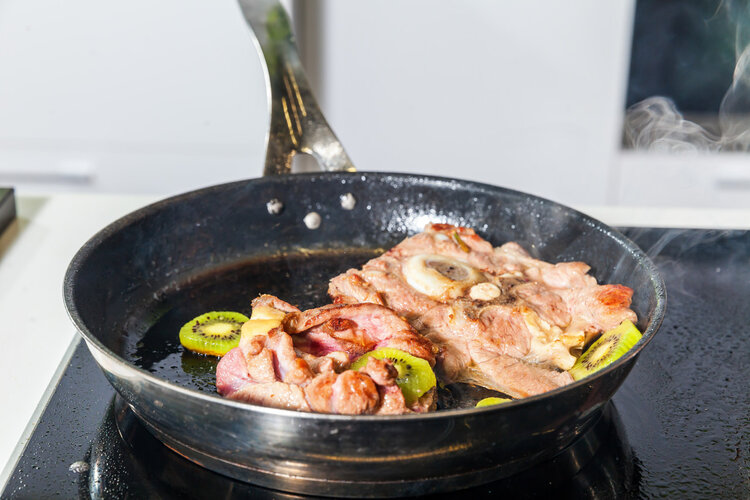
4. Vegetable oil should not be reused. Frugal cooks often hesitate to throw away used frying oil, thinking it's a waste to throw it away after only one or two uses. However, this is not advisable. Repeatedly used oil may contain residual carcinogens such as benzo[a]pyrene, as well as aldehydes and heterocyclic compounds. It's best to use cooking oil only once; trying to save money on oil ultimately leads to more harm than good.
Home-cooked meals are appealing because they are healthy and delicious. Changing bad cooking habits can also help protect your family and yourself from the risk of cancer.