Amy is 42 years old and a middle school teacher. She usually has a lot of work pressure and often needs to stay up late to prepare lessons. To stay awake, she can only drink coffee, sometimes up to 5 cups a day.
Last week, she lost her balance and fell while getting up in the morning, landing on her right side first, and felt a sharp pain in her collarbone. A hospital examination revealed a fractured collarbone, and she was also diagnosed with osteoporosis . This greatly surprised Amy; she had only fallen, how could she have fractured a bone? And osteoporosis, isn't that a disease that only affects the elderly?
After reviewing her medical history, the doctor concluded that Amy's osteoporosis was related to her long-term, excessive coffee consumption. The caffeine in coffee can cause calcium loss , and coupled with Amy's irregular eating habits due to work , resulting in insufficient calcium intake , the combined effect of these two factors induced osteoporosis.

I. Drinking a cup of coffee every day may bring your body 5 benefits.
A cup of coffee first thing in the morning has become a staple for many young people, with some even considering it a "life-saving miracle" and unable to live without it. Regular coffee consumption may offer these health benefits.
1. Refreshes the mind and relieves fatigue
When a person is fatigued, the brain secretes a large amount of adenosine. Caffeine can bind with adenosine, blocking the fatigue signals emitted by adenosine. In this way, the brain cannot receive the signals transmitted by fatigue substances, and naturally, it does not feel tired.
2. Aids digestion and promotes bowel movements
The acidic substances in coffee can promote the production of gastric acid, bile, and pancreatic secretions, thus promoting gastrointestinal motility and alleviating indigestion to some extent. Furthermore, studies have found that coffee can stimulate distal colonic motility, enhancing the body's defecation reflex and preventing constipation.

3. Reduce the risk of type 2 diabetes
A study published in *Food and Health: Scientific Evidence Consensus* indicates that moderate coffee consumption may reduce the risk of developing type 2 diabetes. Organizations such as the International Diabetes Federation have even directly recognized black coffee as part of a healthy diet, recommending that people with diabetes drink it in moderation.
4. Reduce the risk of liver disease/liver cancer
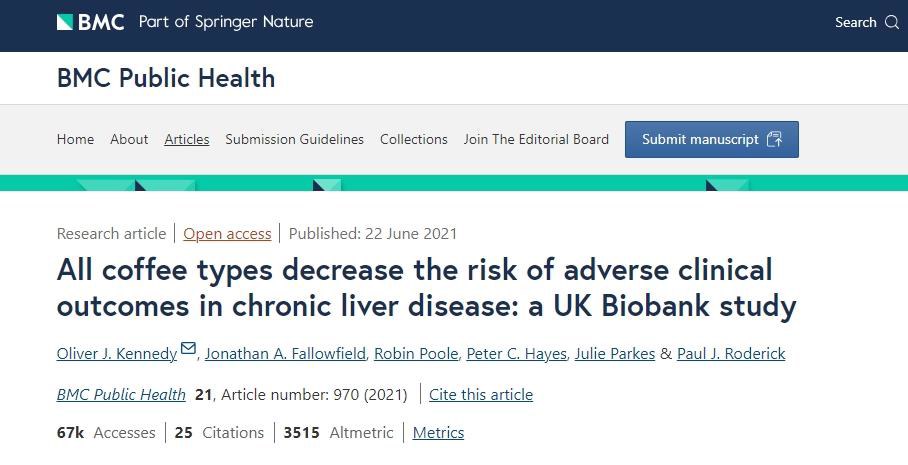
Scientists from institutions such as the University of Southampton published a study in BMC Public Health that analyzed data from more than 495,000 regular coffee drinkers in the UK Biobank and followed them for 10.7 years.
The results showed that, compared to non-coffee drinkers, participants who consumed coffee had a 21% lower risk of chronic liver disease, a 20% lower risk of developing chronic or fatty liver disease, and a 49% lower risk of death from chronic liver disease. Researchers stated that cafestol and caffeine in coffee have been shown to prevent chronic liver disease in animals.
Moreover, those who drink 3-4 cups of coffee a day benefit the most.
5. Reduce the risk of Alzheimer's disease
A study published in the journal Impact Factor by researchers at the University of Wisconsin-Milwaukee, which followed 6,467 women for more than 10 years, found that women over the age of 65 who consumed high levels of caffeine could reduce their risk of dementia . This level is roughly equivalent to drinking 2-3 cups of coffee a day (about 230ml/cup).
II. These 4 common questions about coffee are often misunderstood by many people.
There has always been much controversy regarding the relationship between coffee and health. Some say that drinking coffee can cause heart disease, some say that the caffeine in coffee is addictive, and some say that drinking coffee can lead to osteoporosis. So which of these claims is true and which is false?
Myth 1: Drinking coffee is bad for cardiovascular health
Caffeine increases nerve excitability, leading to a faster heart rate, vasodilation, and a certain degree of acceleration in respiratory rate and gastrointestinal motility. People with caffeine intolerance may experience symptoms such as palpitations, dizziness, and general malaise after drinking coffee; these symptoms are more pronounced at higher concentrations. However, for regular coffee drinkers, there is no need to worry if no symptoms are present.
Conversely, a study presented at the 2021 European Society of Cardiology Congress indicated that drinking half to three cups of coffee daily can reduce the risk of death from cardiovascular disease by 17% and the risk of stroke by 21%.

Myth 2: Drinking coffee can cause osteoporosis.
It's undeniable that caffeine does increase the excretion of calcium in urine and the secretion of calcium in the small intestine, and the oxalic acid in coffee can bind with calcium and inhibit its absorption. However, we cannot discuss toxicity without considering dosage. Only long-term, high-dose (>300mg) intake of coffee increases the risk of osteoporosis, requiring at least 3-4 cups per day, which is unlikely for most people.
A cup of coffee can cause the body to lose 2-3 mg of calcium, while 100 ml of milk contains about 100 mg of calcium. Drinking some milk while drinking coffee can completely offset the calcium loss , so there's no need to worry too much.
Myth 3: Drinking coffee is addictive.
While coffee can indeed be addictive, withdrawal does not have lasting physical or mental effects. Studies have found that consuming more than 100mg of caffeine daily can lead to dependence, and stopping consumption for 12-24 hours can cause symptoms such as difficulty concentrating, headaches, and anxiety.
However, these symptoms usually subside after 2 to 3 days and do not last indefinitely.

Myth 4: Coffee causes cancer
This claim mainly stems from the presence of acrylamide in coffee , a substance produced during the roasting process. In reality, acrylamide is not a rare substance; it's found in various baked goods containing starch .
Furthermore, acrylamide carcinogenicity was only found in animal studies with high exposure levels , and the amount humans can ingest through food is less than 1% of the experimental results. Even disregarding the fact that animal study results cannot be directly extrapolated to humans, there is no need to be overly concerned about the dosage alone.
III. For long-term coffee consumption, doing these 4 things will make you healthier.
While drinking coffee isn't as carcinogenic as some claim, there are still several things to keep in mind when drinking it. Following these tips will make you healthier.
1. Choose to drink black coffee
When drinking coffee, try to choose plain black coffee, as it has a noticeable bitterness. You can add milk to neutralize the bitterness. Try to avoid instant coffee and specialty coffees , as they contain large amounts of white sugar and creamer, making them very unhealthy.

2. It's best to drink it in the morning.
American neuroscientists have calculated that the optimal time to drink coffee is between 9:30 AM and 11:30 AM , as this allows the interaction between cortisol and caffeine in the body to reach its best state. Note that it is generally not recommended to drink coffee on an empty stomach or after dinner, as this can easily cause palpitations and disrupt normal sleep.
3. Do not drink more than 3 cups a day.
Zhong Kai, director of the China Food and Health Information Exchange Center, stated that healthy adults are generally advised not to drink more than three cups of coffee per day. A typical 150ml cup of coffee contains 100mg of caffeine, and the daily intake for a healthy adult should be between 210 and 400mg. Therefore, drinking 3 to 5 cups per day is appropriate, but it's best not to exceed 3 cups to avoid excessive caffeine intake and potential health risks.
4. Certain groups should drink with caution.
A professor of clinical nutrition published an article reminding that five groups of people should be cautious about drinking coffee: pregnant women, children under 12 years old, patients with digestive system diseases such as stomach disease/gastroesophageal reflux, patients with cardiovascular diseases such as hypertension/arteriosclerosis/coronary heart disease, and patients with gout .

Coffee is not as terrible as some online rumors suggest, but it's important to control your intake. Excessive consumption can indeed pose some unnecessary health risks, and this needs to be clearly understood.