The concept of health preservation has existed since ancient times. The *Huangdi Neijing* states: "A sage does not treat illness that has already manifested, but rather prevents it before it occurs." This means that a skilled doctor does not wait until disease develops to treat it, but rather takes preventative measures before illness strikes. For example, the human body has five major health-preserving zones; protecting these zones makes health preservation and disease prevention twice as effective.
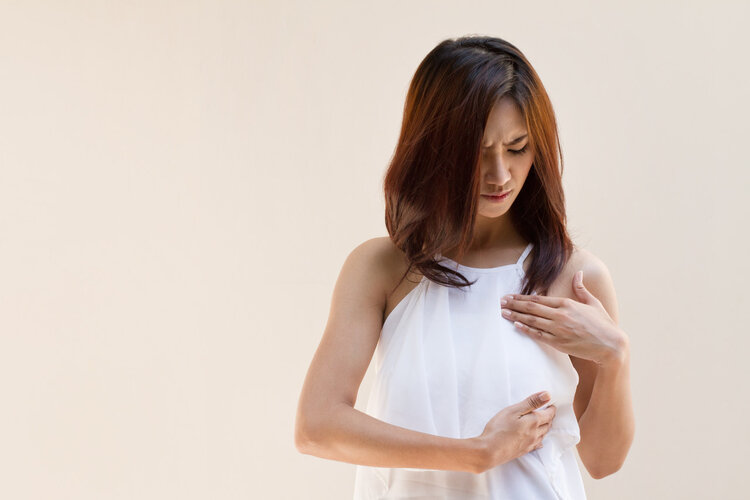
1. Chest health care area.
Traditional Chinese medicine believes that the lungs, located in the chest, govern qi and respiration. Zong qi (ancestral qi) is generated in the lungs and accumulates in the "sea of qi" in the chest, exiting through the trachea and throat to promote lung respiration. If zong qi is not consolidated, and the ascending, descending, entering, and moving of qi in various organs and meridians becomes disordered, it will lead to "qi deficiency," manifesting as symptoms such as a weak voice, fatigue, and shortness of breath.
Massaging the chest, performing chest expansion exercises, and regulating breathing can improve cardiopulmonary function and effectively prevent respiratory diseases. For chest expansion exercises, try the "Drawing the Bow to Shoot the Eagle" movement from the Eight Pieces of Brocade. The specific method is: Open your feet slightly wider than shoulder-width apart, lightly clench your fists, raise them to your chest, keeping your right hand still, and extend your left arm straight out to the left, looking at your left fingertips, while simultaneously squatting into a horse stance. Then return your hands to the starting position. Repeat on the other side. Coordinate the drawing of the bow with breathing exercises; inhale deeply when drawing the bow and exhale slowly when returning to the starting position. This chest expansion and arm extension increase lung capacity and improve blood circulation.
2. Armpit health care area.
People rarely touch their armpits, but they shouldn't be ignored. Traditional Chinese medicine believes that the armpit is where the Heart Meridian passes, with its apex being the Jiquan acupoint. Regular massage can soothe the chest, calm the mind, and regulate Qi and blood. From a modern medical perspective, the armpit is rich in lymphatic tissue; regular massage can promote blood circulation and improve immunity.
Regularly tapping the five hollows—the back of the legs, elbows, armpits, navel, and lumbosacral hollow (commonly known as the "waist eyes")—can regulate qi and blood, promote circulation, and relax muscles. The tapping should be rhythmic, with the force gradually increasing from light to heavy. Recommended armpit massage method: Cross your arms in front of your chest, place your hands on the opposite armpits, and gently knead. Then raise your left hand and tap your left armpit with your right hand; raise your right hand and tap your right armpit with your left hand. Tap 30-50 times each time, repeating 5 times.
3. Spinal health care area.
Prolonged sitting negatively impacts spinal health; therefore, those who sit for long periods should pay extra attention to spinal health. The spine is where two meridians and the Governing Vessel pass through, and it is closely related to the internal organs, making it a region of great interest to health practitioners. Regularly massaging the spine can unblock meridians, stimulate blood and qi circulation, and nourish all organs of the body.
There are many ways to maintain spinal health. For most white-collar workers, stretching is the most convenient and practical way to maintain health. If possible, it is recommended to do the "shaking head and wagging tail" movement in Baduanjin (Eight Pieces of Brocade). Through large-scale lateral bending and rotation of the spine, the head, neck, waist, abdomen, thighs, and legs are contracted, increasing the flexibility of the neck, waist, hip joints, and lower limbs.
4. Navel health care area.
Traditional Chinese medicine believes that the abdomen is the "palace of the five internal organs and six bowels, and the source of yin and yang qi and blood." Among them, the spleen and stomach are the hub of the body's qi movement; the navel is the place where essence and qi gather, and it is also an important acupoint, "Shenque," which is connected to the 12 meridians; there are also acupoints such as Qihai, Guanyuan, and Zhongwan around it. Gently massaging these points can improve qi and blood and regulate the functions of the body's internal organs.
Traditional Chinese medicine advocates "frequent abdominal massage." It is recommended to massage the lower abdomen before bed and upon waking to increase gastrointestinal motility and enhance spleen and stomach function. Applying heat to the lower abdomen can also achieve health benefits. Use a hot water bottle or towel slightly warmer than body temperature to gently apply to the navel for several minutes, then remove it. Repeat this 1-2 times daily. Additionally, the navel is included in the "five hollows" practice. Regularly tapping the navel can calm the mind, harmonize qi and blood, soothe the liver and gallbladder, benefit the lungs and kidneys, clear the triple burner, and regulate the meridians.
5. Foot care area.
The soles of the feet have a rich network of peripheral nerves, capillaries, and lymphocytes, and contain reflex zones for the whole body, earning them the nickname "second heart." Regular foot massage and soaking the feet in hot water for half an hour daily help warm the meridians, promote blood circulation, and improve overall health. Adding herbs that promote blood circulation, such as safflower, angelica, notoginseng, chuanxiong, and salvia miltiorrhiza, to the foot soak will enhance the effect. You can also wrap the herbs in gauze to make a herbal sachet, soak it in hot water beforehand, and add a few drops of white wine or vinegar after half an hour. This not only improves blood circulation but also alleviates insomnia symptoms.
The Yongquan acupoint, located in the depression at the front of the foot, can be used to treat various ailments, especially senile asthma, constipation, and lower back and leg weakness, through long-term rubbing, moxibustion, application of medicated plasters, and manual pushing and patting techniques. ▲