
We often see many people whose health does not improve after taking tonics and health supplements; instead, they experience varying degrees of discomfort, and some even experience a worsening of their condition. This situation is called "being unable to tolerate tonics."
How does Traditional Chinese Medicine view the phenomenon of "being unable to tolerate tonics when deficient"?
The Inner Canon states, "Supplement what is deficient, purge what is excessive." This means that when the body is deficient, it can be nourished. So why is there also the saying, "A weak body cannot tolerate supplementation"?
From the perspective of Traditional Chinese Medicine (TCM), "deficiency with tonics" means that a person with a weak constitution cannot tolerate the effects of tonics. Tonics can replenish deficiencies in the body's Qi, blood, Yin, and Yang, treating various deficiency syndromes, but they are not a panacea. Tonics also have specific indications, side effects, and contraindications. Improper use can be counterproductive, leading to "deficiency with tonics." Many people with weak constitutions, or those recovering from serious illnesses, place all their hopes on various tonics, making them most susceptible to this condition.
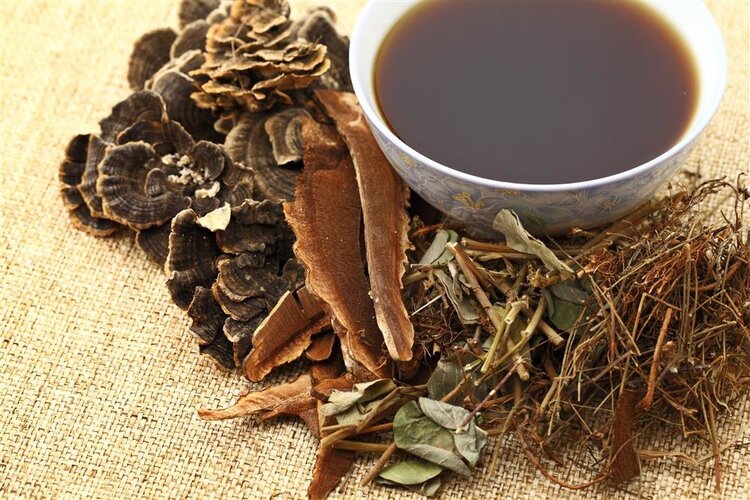
There are four reasons why a person with a deficiency cannot tolerate supplements.
Traditional Chinese medicine believes that "deficiency should be supplemented, excess should be purged, heat should be cooled, and cold should be heated." Therefore, people with weak constitutions need to adjust their constitution by replenishing qi, blood, yin, and yang. They also need to supplement their diet according to their individual constitution and symptoms.
Supplementation is intended to replenish deficiencies and strengthen the body. However, if supplementation is not appropriate, excessive, or improper, it can cause adverse reactions, leading to a condition where the body cannot tolerate the supplements. For example, some people experience increased internal heat after consuming supplements. The reasons for this can be summarized in the following four aspects:
1. The error was corrected.
"Mistaking the right tonic" means you believe you have a deficiency syndrome when you actually have an excess syndrome. Many people have excess syndromes such as dampness, blood stasis, and qi stagnation. Taking tonics will only make the blockages worse. When deficiency and excess are not distinguished, and an excess syndrome is treated as a deficiency syndrome and tonics are given, the body will naturally activate its defense mechanism, resulting in discomfort. In this case, the excess pathogens must be eliminated first before tonics can be given.
2. Poor circulation of Qi and blood in the body
In order to be effective, tonics entering the body must be transported throughout the body via the "qi and blood" system. When the qi and blood are not flowing smoothly, the "conveyor belt" will naturally slow down or stop. Not only will the tonics fail to work, but it will also slow down the conveyor belt even more, creating a vicious cycle.
3. Weak spleen and stomach
Traditional Chinese medicine believes that the spleen and stomach are the body's central organs, responsible for regulating the flow of Qi (vital energy), specifically the ascending of clear Qi and the descending of turbid Qi. When the spleen and stomach are weak or obstructed, the Qi flow reverses, and the "ministerial fire" (a concept in Traditional Chinese Medicine) that should descend to the lower abdomen to warm the kidneys rises to the head and face. The body cannot digest and absorb these nourishing nutrients, leading to stagnation and symptoms of internal heat. Therefore, for those with weak spleens and stomachs, the more tonics they take, the more severe the internal heat becomes. For ingested tonics to be transformed into Qi and blood, the spleen and stomach must be strong and functioning properly.

4. No supplements are needed at all.
This is the most common situation. Peng Zeng, a famous physician of the Qing Dynasty, said: "The meaning of tonification is of utmost importance. Some people fail to tonify when they should, thus harming others; some tonify inappropriately, thus harming others; and some tonify when they should, but fail to differentiate between qi and blood, cold and heat, urgency and urgency, the five internal organs, and the root cause, thus harming others. Such cases must not be ignored." For the body, more tonification is not necessarily better; tonification must correspond to certain symptoms. If you don't have any symptoms of weakness and blindly tonify, you will naturally be unable to tolerate the tonification.
There are three effective ways to properly supplement your diet.
There are three principles to remember when taking tonics: First, eliminate the excess if there is a mixture of deficiency and excess; second, regulate the spirit and energy before nourishing the body; and finally, correct imbalances and harmonize the stomach according to yin and yang.
When you determine that you are physically weak and really need tonics, you shouldn't just take all sorts of supplements indiscriminately; you need to master the correct methods.
"Supplementation" encompasses four aspects: replenishing qi, replenishing blood, replenishing yin, and replenishing yang. Traditional Chinese medicine states, "If a deficiency cannot tolerate supplementation, the root cause lies in the imbalance of the spleen and stomach." Deficiency syndromes are generally classified into four types: qi deficiency, blood deficiency, yin deficiency, and yang deficiency. Therefore, supplementation should be performed according to the traditional Chinese medicine principle of "supplementing deficiency and purging excess."
Finally, identifying one's constitution is paramount. As the saying goes, "one medicine, one property; one remedy, one prescription," meaning each tonic is only suitable for a specific constitution and treats a specific ailment. Therefore, before taking any tonic, it is essential to consult a qualified Traditional Chinese Medicine (TCM) practitioner at a reputable hospital to determine your constitution—whether it is Yin deficiency, Yang deficiency, Qi deficiency, Blood deficiency, etc.—and then receive appropriate treatment and scientific supplementation.

Further question: How can I determine if I am a person who is "too weak to tolerate tonics"?
-
Despite being very sensitive to cold, I get heaty when I eat or take warming foods or medicines such as ginger, mutton, or longan.
-
Despite feeling weak and feeble, taking tonifying herbs like astragalus or ginseng can cause discomfort, such as chest tightness, nausea, and fever.
-
The body shows obvious symptoms of yin deficiency, such as no tongue coating, loss of tongue coating, and white tongue coating. However, when taking yin-nourishing medicines such as donkey-hide gelatin and red dates, gastrointestinal discomfort occurs, feeling unable to digest, and symptoms such as bloating and stomach pain occur.
When you encounter the above situation, it may be that you have a constitution that cannot tolerate tonics. You need to remove the excess symptoms and then regulate your spirit before tonifying your body.