
To avoid hurting your knees while jumping rope, you need to pay attention to the correct methods. The correct methods can not only increase the weight loss effect but also protect your knees.

Correct way to jump rope
Preparation: With the rope behind your calves, keep your arms close to your sides, tuck in your abs, and slightly hunch your shoulders.
Movement Procedure: Keeping your upper arms close to your body, shake your forearms and wrists to swing the rope forward. Each time the rope is about to touch the ground, gently lift your toes off the ground, simultaneously bending your knees slightly and contracting your abdomen, raising your feet approximately the diameter of the rope. Repeat this cycle. See below:
Note the stable parts: the upper arm near the shoulder, abdomen, and hip joint are very stable and almost still; only a few small joints move: such as the wrist and ankle joints, which swing very flexibly.

Many people might say that there are countless jump rope moves, and there are even competitions for fancy jump rope, so why is it that only this type of jump rope move, where most of the body is stable and only small joints are used, is the standard move we advocate? In fact, these fancy moves are all advancements of the standard moves, so you must build a solid foundation before trying fancy moves, otherwise you'll be courting disaster with fancy moves.
During rope skipping, the knee joint experiences frequent friction against the meniscus and the ligaments stretch, which can lead to pain, soreness, and other exercise-related reactions. Therefore, it's best not to fully straighten your knees when skipping rope; instead, land with your knees slightly bent.
In addition, when jumping rope, pay attention to the following: try to land on your toes and reduce the time spent on the ground. You can lean your body slightly forward. This is not mainly to reduce minor damage to the knees, but to avoid increasing the pressure on the brain and spine.
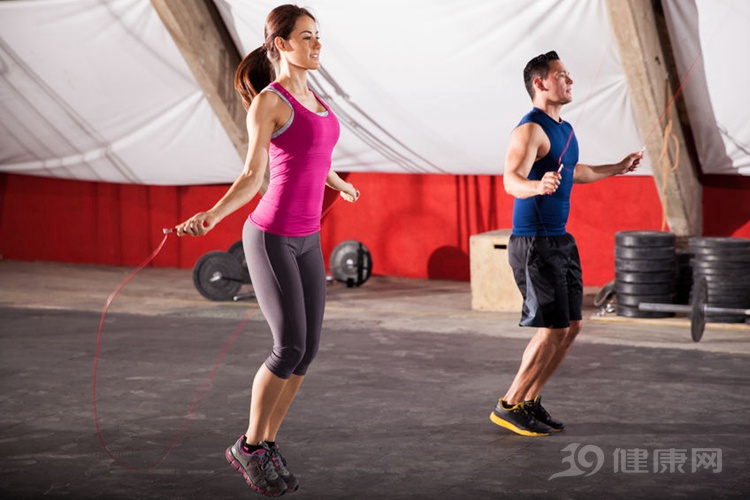
You don't need to swing the jump rope with your shoulders; you need to learn to use the strength of your forearms and wrists.
Do not swing the jump rope too much. Excessive swinging is a waste of time and energy and will also affect your jumping speed.
You should keep your upper arms close to your body and use the strength of your small joints to swing the jump rope. Therefore, it is recommended to use a lighter jump rope, not a heavy-duty one, as it will increase the impact on your joints.
You don't need to jump high; just barely making it is impressive.
We're not using jump rope to improve jumping ability, nor are we aiming to leap into the sky! Instead, we're using continuous jumping to achieve a fat-burning effect. Therefore, the ideal height for jump rope is when the rope passes under your feet. Excellent jump rope users don't show any jumping motion; instead, they experience a trembling sensation.