Every food contains calories, and to find out exactly how many calories are on a product, we need to understand how to read the product's calorie label. Today, I'll show you how to read a product's calorie label.

Ingredient lists help us understand the true nature of food.
According to regulations, the ingredient list should include all substances present in the food (including additives), and these substances should be listed in descending order of quantity. When the amount added is less than 2%, the order of quantity does not need to be followed.
This means that to know what the main ingredients in a food are, we can simply look at the ingredient list. The ingredient listed first is also the one present in the largest quantity in that food.
Nutrition labels help us achieve macronutrient balance
The nutrition label is the key to this "killer app".
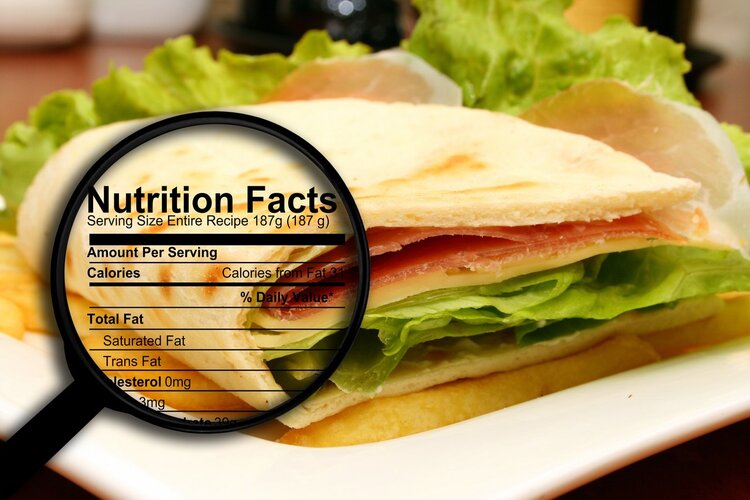
According to regulations, nutrition labels must include the energy content, the content of core nutrients, and their percentage of the Nutrient Reference Value (NRV). When the ingredient list contains hydrogenated and/or partially hydrogenated vegetable oils, the content of trans fats (acids) must also be indicated on the nutrition label.
This means that we can obtain at least the following information from food labels:
This food contains the values and NRV percentages for energy, protein, fat, carbohydrates, sodium, and trans fatty acids.
How many calories should an adult consume per day to be considered healthy?
The energy requirement for adults (18-49 years old) with light physical activity is 2250 kcal for men and 1800 kcal for women.
If you want to lose weight, you need to appropriately reduce your calorie intake. It is recommended to reduce your daily energy intake by 300-500 calories.
If you've already started controlling your calorie intake but still want to lose weight faster, you can use extra exercise to help burn off more of the calories you eat.
Daily calorie control techniques
1. Control food intake
Eat only until you are 70-80% full at each meal, eat slowly, chew each bite thoroughly before swallowing, and stop eating when you feel you could skip it. Focusing on eating and chewing carefully helps you naturally control the calories in your food. At the same time, be mindful to reduce your intake of fatty staple foods such as bread, biscuits, fried dough sticks, instant noodles, and snacks.

2. Reduce your intake of cooking oil.
Use less oil when cooking and avoid any fried or overly oily foods. Reduce the frequency of dining out; if you cannot avoid it, be sure to avoid dishes that are high in fat or fried. Try to order light, low-fat dishes, such as blanched, steamed, or cold dishes, and choose plenty of leafy green vegetables.
3. Pay attention to hidden fat.
What are hidden fats? They are the fats we usually overlook and don't pay attention to, such as many snacks, like French fries, potato chips, pastries, puffed foods, egg yolk pies, biscuits, nuts, noodle soup base, ice cream, and coffee creamer, all of which contain a lot of fat, and many of them contain trans fatty acids.